


REGRESSION ANALYSIS IN THE AI ERA: FROM A TOOLKIT TO A SCIENTIFIC RESEARCH MINDSET
129 Views - Date: 17/08/2026 18:56:32
On the morning of August 15, 2026, the Southern Institute of Social Resource Development (Phuong Nam Institute) held the opening ceremony for the expert course “Applied Regression Analysis with AI and R.” Conducted over four consecutive days, the program adopts a hybrid format, combining in-person sessions with online participation via Zoom, and is led by Prof Tuan V Nguyen and Dr Thach Tran.
Regression Analysis – A Fundamental Tool in Scientific Research
Across a wide range of research disciplines—from medicine and health sciences to economics, social sciences, and applied sciences—regression modeling is one of the most widely used statistical approaches. It plays an important role in examining relationships between variables, making predictions, optimizing systems and processes, and testing scientific hypotheses, etc.
However, applying statistical models goes well beyond operating statistical software. Every analytical result depends on a series of important decisions concerning the research question, model selection, the assessment of model assumptions, and the interpretation of findings. This principle lies at the core of the course: helping participants move beyond simply “running a model” towards understanding the underlying principles of regression analysis and selecting, applying, and interpreting regression models appropriately for different data types and research designs.
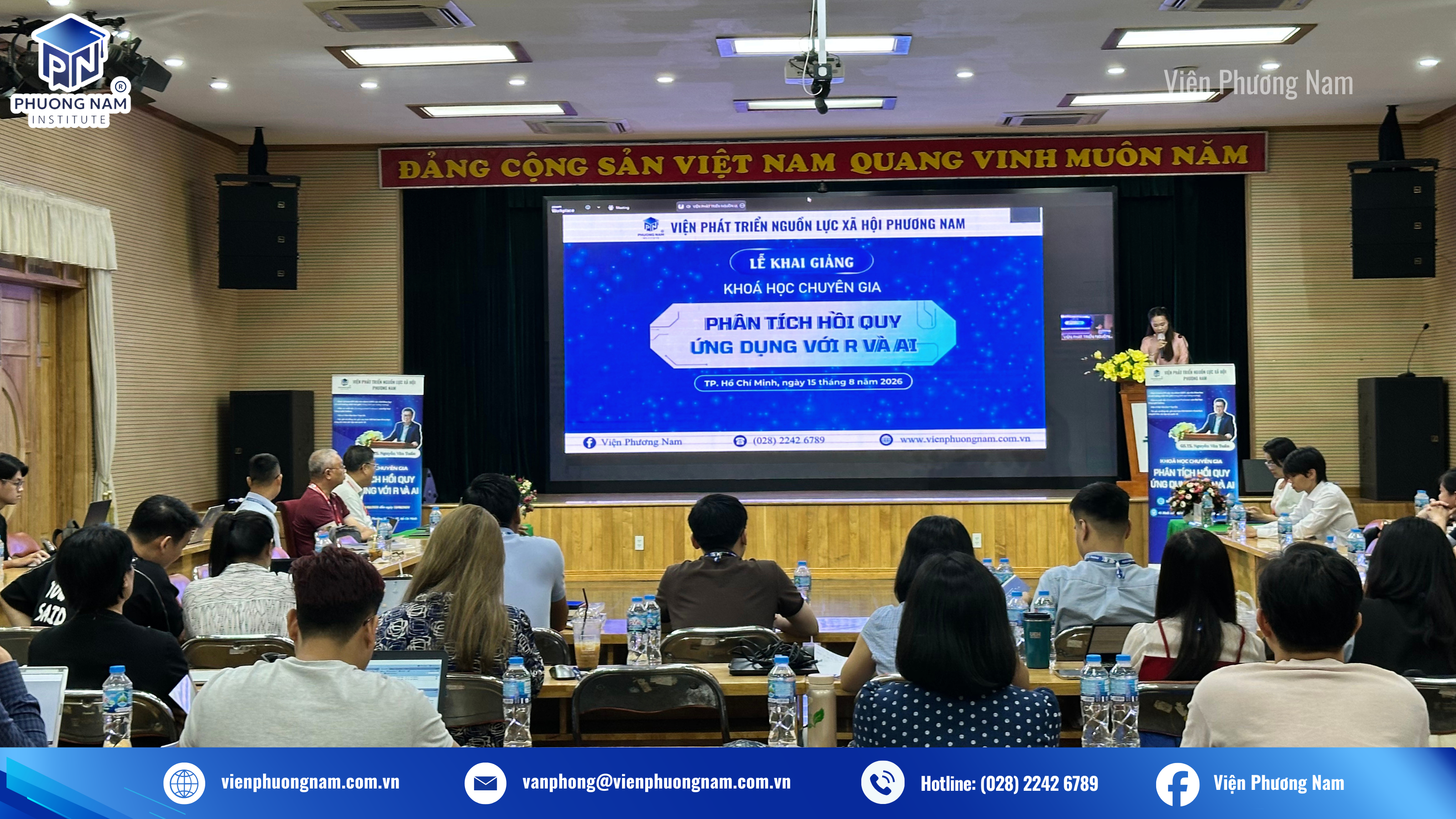
An overview of the opening ceremony for the expert course “Applied Regression Analysis with AI and R” on the morning of August 15, 2026.
From R to AI: A Modern Data Analysis Workflow
The four-day course comprises eight sessions and 15 lectures, covering foundational knowledge of R, principles for the responsible use of AI, data visualization, and three core regression models: linear regression, logistic regression, and Cox regression. Participants also engage in hands-on exercises involving model development, validation, interpretation, and the effective presentation of data analysis results.
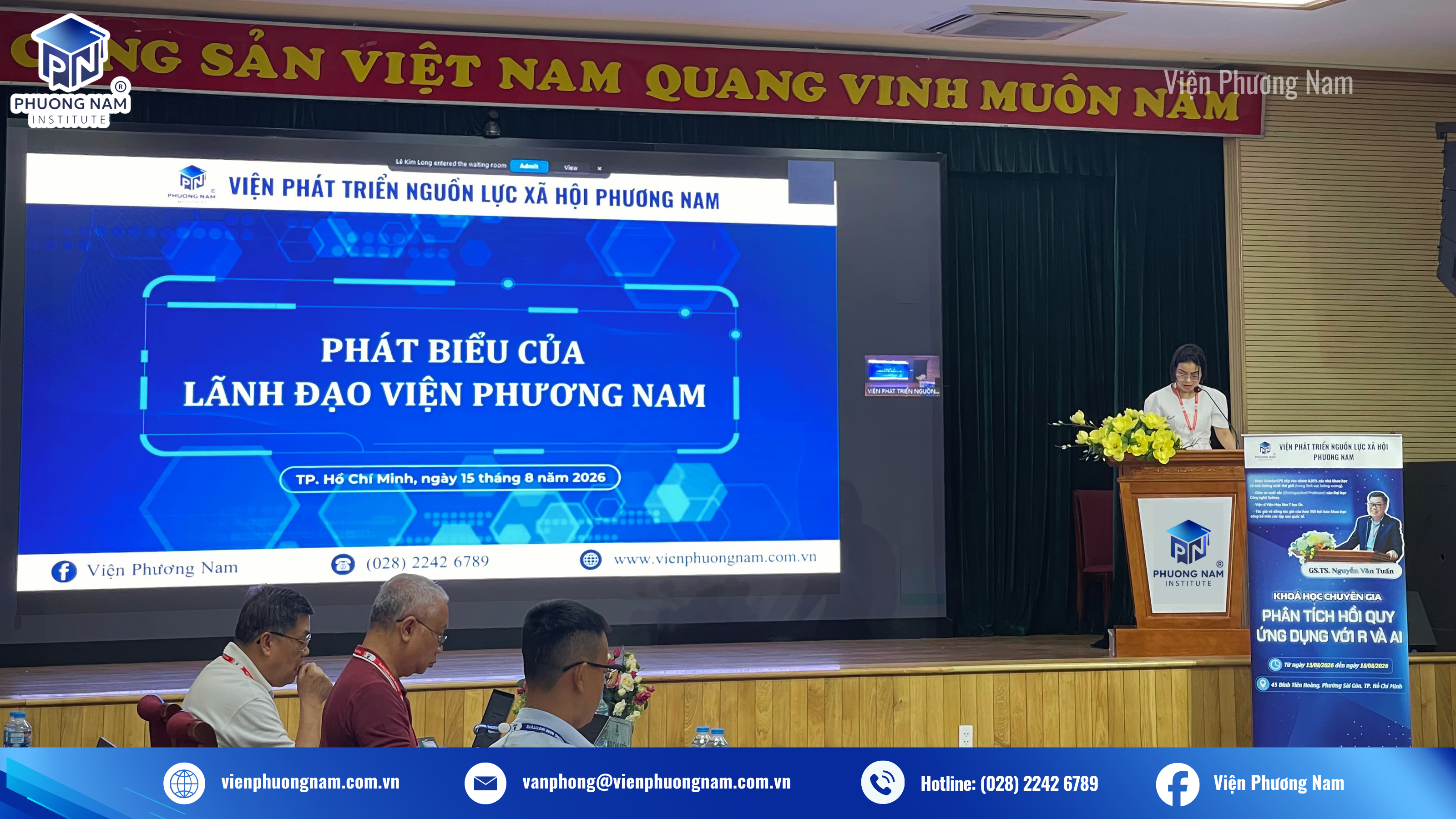
Ms Nguyen Thi Xuan Vy, Director of Phuong Nam Institute, delivering the opening remarks at the ceremony.
A key feature of the program is the integration of AI into the data analysis workflow within a structured and carefully guided framework. AI can support researchers in processing data, writing and checking code, visualizing data, and interpreting results. Nevertheless, responsibility for selecting appropriate analytical methods, assessing model validity, and drawing scientific conclusions ultimately remains with the researcher.
Learning from International Research Experience
The course is led by Prof Tuan V Nguyen, Distinguished Professor at the University of Technology Sydney and Fellow of the Australian Academy of Health and Medical Sciences, together with Dr Thach Tran, a medical researcher at the Garvan Institute of Medical Research and currently working at the University of New South Wales in Australia. The combination of methodological foundations, extensive research experience, and hands-on data analysis enables participants to approach regression modeling not merely as a technical exercise, but as an integral component of the broader scientific research process.
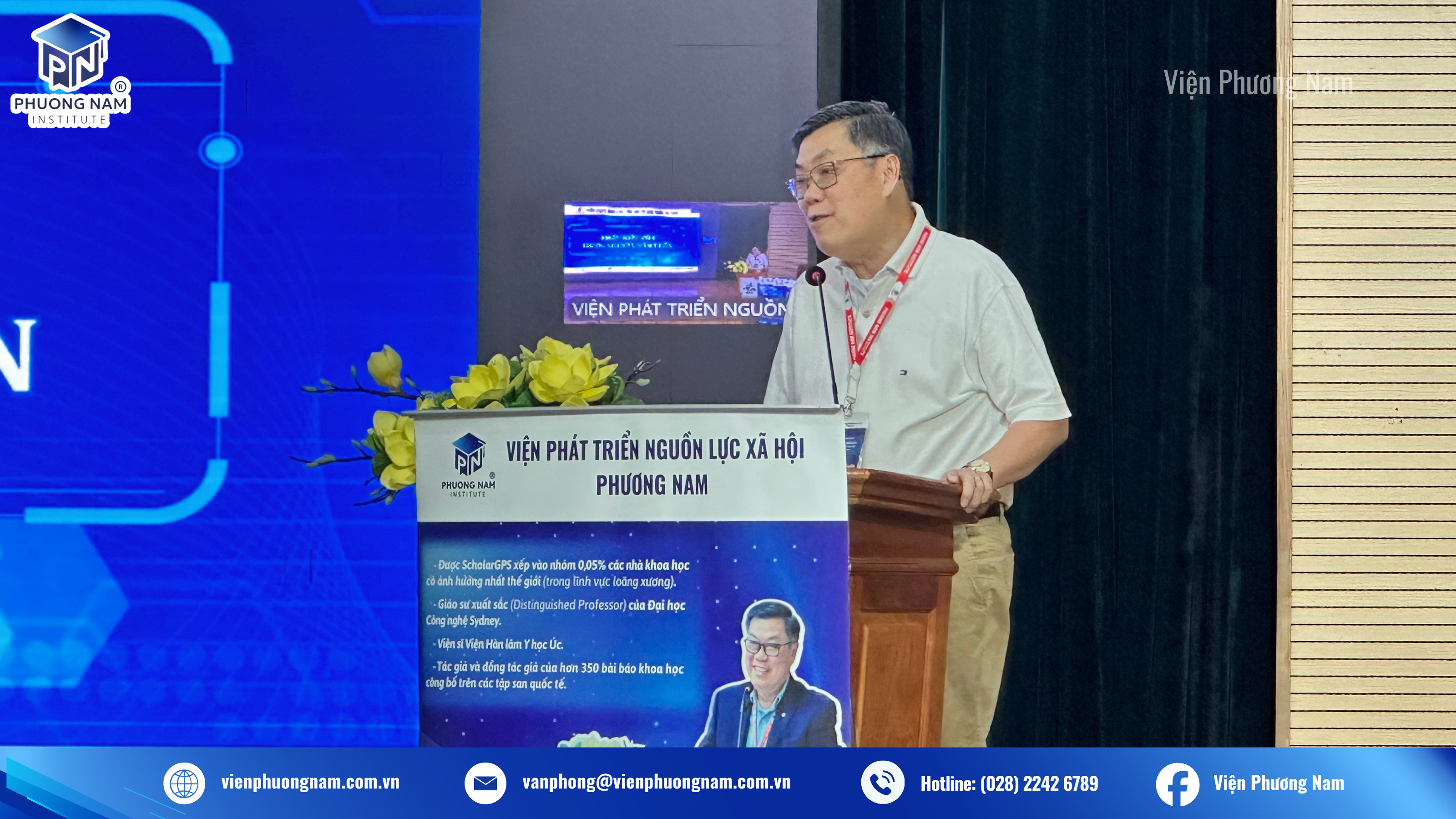
Prof Tuan V Nguyen sharing academic perspectives with participants before the intensive course begins.
Strengthening Data Analysis Skills and Scientific Responsibility
Through the course, participants are expected to strengthen their analytical thinking, develop greater proficiency in R, and use AI effectively as an advanced tool to support scientific research. The program also aims to develop participants’ ability to critically evaluate analytical results, assess statistical models, and interpret data with appropriate caution and scientific rigor.
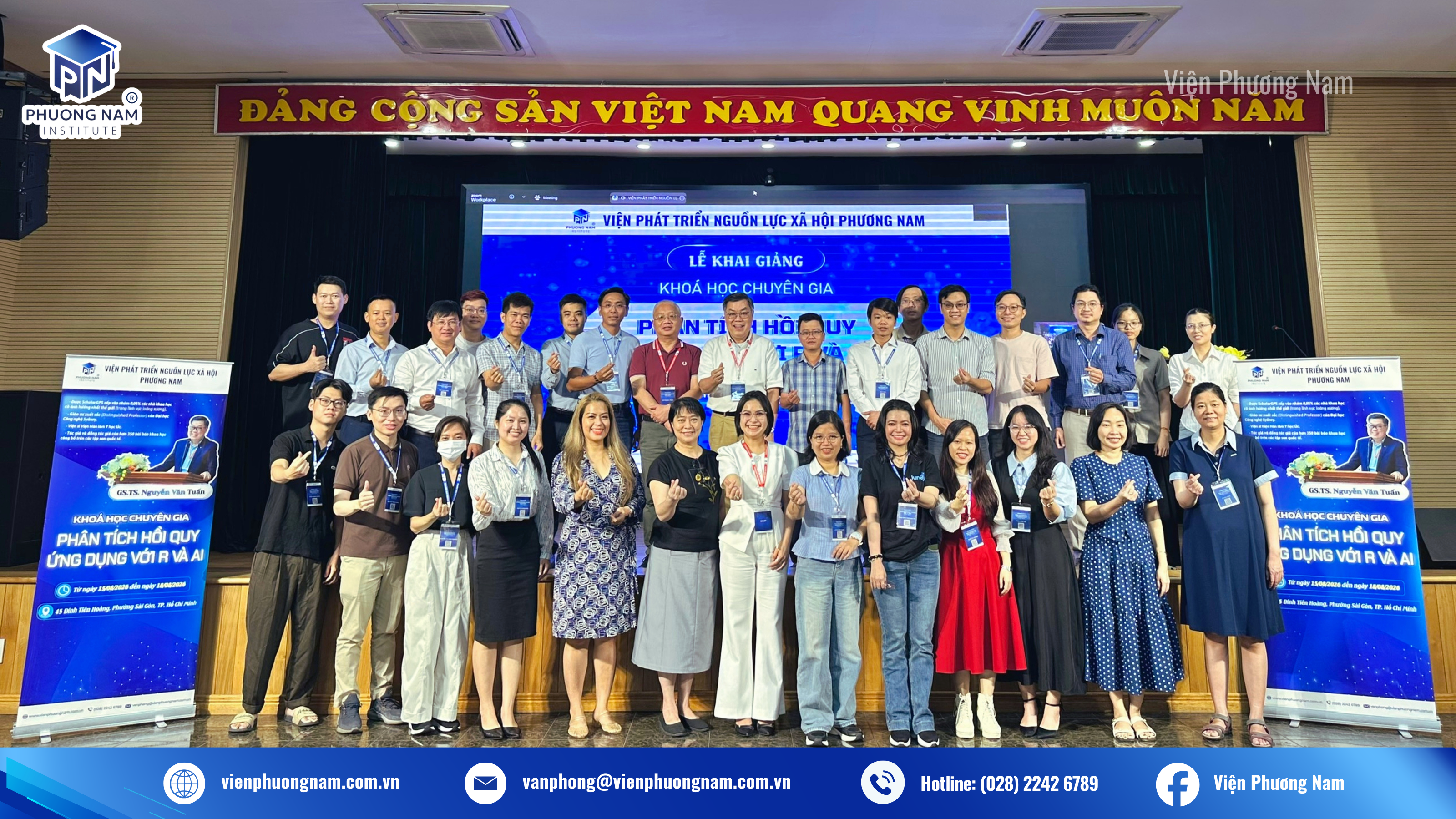
Prof Tuan V Nguyen, Dr Thach Tran, Ms Nguyen Thi Xuan Vy, and course participants posing for a commemorative photograph at the opening ceremony.
The course also reflects Phuong Nam Institute’s strategic commitment to developing training and professional development programs that integrate research methodology, data analysis, and emerging technologies. Through such initiatives, the Institute seeks to strengthen the research capacity of researchers, lecturers, and postgraduate students and support their engagement with increasingly rigorous international standards in scientific research.
Ai Vy
Related articles
- STAYING UP TO DATE – EFFECTIVE APPLICATION – RISK CONTROL IN TAX AND ACCOUNTING
- FROM LEGAL AWARENESS TO EFFECTIVE APPLICATION: TRAINING PROGRAM CONCLUDES IN HAI PHONG
- OPENING CEREMONY: TRAINING COURSE ON “ENHANCING LEGAL KNOWLEDGE ON LABOR, EMPLOYMENT, AND SOCIAL INSURANCE” AT SOUTHERN VIETNAM MARITIME PILOTAGE SINGLE-MEMBER LIMITED LIABILITY COMPANY
- UNLOCKING RESEARCH MINDSETS: A RETROSPECTIVE ON THE 6-DAY EXPERT COURSE ON AI AND INTERNATIONAL SCIENTIFIC PUBLICATION
- ENHANCING RESEARCH CAPACITY IN THE ERA OF ARTIFICIAL INTELLIGENCE: “APPLICATIONS OF AI IN DATA ANALYSIS AND SCIENTIFIC PUBLICATION”